

Education
Yo! Opera and Education: the Importance of Making Contact
Just like any other artistic discipline, the opera houses also set up educational projects. Usually, children are introduced to the world of opera by means of a preparatory class and a visit to a performance. It is a world which during the previous decades has drifted further and further away from the normal perception children have of the world. Children often see opera as a pretentious happening, in which fat and hysterical ladies, endowed with a moderate talent for acting only, sing the leading parts in incomprehensible stories from days long gone. This of course is the stereotype, but it is a rather obstinate stereotype. Many education officers in opera see that this is the 'basic knowledge' people have of the genre. Education in opera – adjusting Wagner to the child's 'eye-level' – is therefore nota n easy task. Apart from that, education is not a spearhead in the opera world; education often follows from marketing and the main purpose of educational activities is to bring in new audiences.
The quality improvement of the youth opera genre Yo! Opera had in mind requires a great focus on education. However, since the operas produced by Yo! Opera fit in with children's perception of the world, some of the difficult stereotypes mentioned above are not an issue at all. Therefore, the emphasis is on carrying children along to that special artistic discipline, instead of explaining a far too complex musical, visual of textual language.
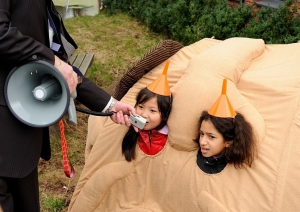
From the beginning, Yo! Opera held not only the more traditional attitude towards education (a preparatory class and attending an opera performance during the festival), but also applied participative methods. The experience of singing, alone or as part of an ensemble, may be quite a thing for children, but it is a step they can be seduced to take. Therefore, the early festival editions all had an open stage: a place where children and youth (who cannot so easily be tempted to sing in public) could sing their own favourite music. Apart from that, in the early years of the Yo! Opera Festival projects were organised in which children took part in a performance, after some preparation. Mostly, this happened in short education projects, organised together with one or several school classes. Bedelaartjes [Little Beggars] is an existing concept, which was used by children during the 2003 and 2005 festival editions.
Yo! Opera soon realised that, in order to truly interest children and especially adolescents in the opera genre, the contacts with these groups had to be more intensive, more powerful and especially longer lasting. Therefore, from 2004 the focus shifted more and more towards longer-term projects in which participation was to lead to a demonstrable creative contribution of the children to a performance or presentation. Because of this, high quality teachers were needed to work with the school classes: the average education officer who tells a class a story would not suffice. This of course also gave an impulse to talent development of students from vocational institutions – one of the other spearheads Yo! Opera had.
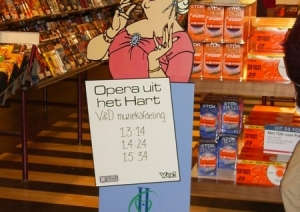
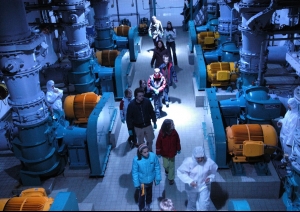
By embracing the concept of community art in 2004 (Opera uit het Hart [Opera from the Heart]) several new opportunities in the field of education presented themselves. Participation became one of the starting points of Yo! Opera's projects. Children became librettists of mini-operas. This concept was re-used many times thereafter, such as in De Operaflat and Grensgevallen [Borderlines]. Poets and writers entered the classroom to create stories, poetry or song textst together with children. In Water, a project set up in collaboration with the young composers Paul Oomen and Matthias Konecny and performed in a sewage plants in 2005, 50 children of the Utrecht Rietendakschool play a role. Water was part of the programme of Tweetakt, an annual theatre festival for children and youth taking place in Utrecht.
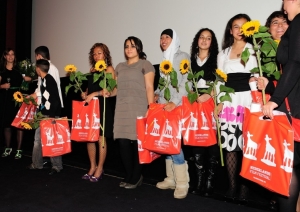
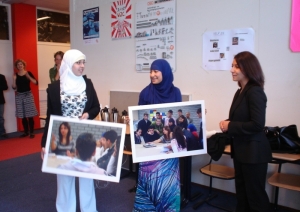
From then on, the community projects of Yo! Opera gain more strength because of the creative partnerships entered into with the Globe College in the Utrecht district of Kanaleneiland and the Rietendakschool in the district of Ondiep. From 2006, Yo! Opera is permanently present in these two schools and it takes care of part of the lessons on music, writing and other artistic disciplines. The results of this collaboration are presented on various stages: the Yo! Opera Festival, the mini-festival Jong Vee [Young Cattle] by the Lab of De Berenkuil (hosting the production entitled Kuil [Pit]) and other platforms. It must be noted here that the municipality of Utrecht has adopted Yo! Opera's idea of creative partnerships. Since 2007, it encourages cultural institutions and schools to enter into long-term collaborations.
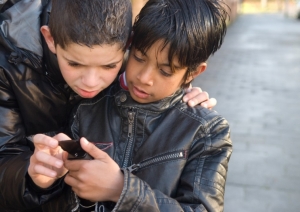
From then on,Yo! Opera used opera as a catch-all term: all creative disciplines (music, text, image, décor, video, etc) may be used to allow children and youth to participate in opera. Depending on the wishes of the school, the children and the possibilities offered by the project itself, there would be room to fill in the participation. In the workshop Yo! Opera in fact was ever since 2005, children were addressed as opera makers. Mutual inspiration between professional opera makers and children was the central point and social objectives went hand in hand with artistic ambitions. The development of methodologies in the field of education gained a lot of attention, especially thanks to the presence of researchers who – from various perspectives – observed the work done by Yo! Opera and reflected upon it. The way in which Yo! Opera intended to explore creativity together with pupils from lower secondary professional education was of great interest to the development of this – then still very new – school type. Terms such as co-ownership, dynamics in the classroom and activating work forms became generally accepted as part of the education policy of Yo! Opera. Its work at Globe College teaches Yo! Opera the importance of the focus on the something which seems extremely simple, but which is not: making contact. Making contact is more than communication, or organising a debate. Making contact and keeping in contact requires a mutual understanding of and respect for each other's motives, backgrounds and desires. There cannot be communication without contact, and no art without communication.
The fact that Yo! Opera's work attracted attention, became clear from the large assignment it received in 2008 from De Nederlandse Opera (DNO). The project is all about the opera Marco Polo by Tan Dun, which was at the time performed by DNO. The project was led by Anthony Heidweiller and Saskia van de Ree, who also hired several freelancers from Yo! Opera. Apart from talent development and community art projects, education was an important element in the project: many secondary schools in Amsterdam participated in the project. In 2008, Yo! Opera was proud to receive the Prijs voor Kunst- en Cultuureducatie 2008 [Art and Culture Education Prize] of the Prins Bernhard Culture Fund, because it had succeeded in 'putting youth opera on the map, both nationally and internationally'.
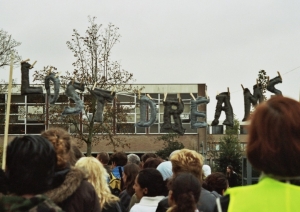
The participation forms developed by Yo! Opera have been worked out in more detail in the last years the organisation existed. In 2009, the festival featured Grensgevallen [Borderlines], an ambitious project for which 10 young people from Utrecht and Berlin wrote the libretti, all of which were based on the theme of the fall of the Berlin Wall twenty years earlier. In the Spring of 2010, the partnership between Yo! Opera and the Rietendakschool concluded with the project Troubadours. The art profile developed by the school is from then on continued by a culture coach, with the support of the Utrechts Centrum voor de Kunsten [Utrecht Art Centre], Brede School Ondiep and Muziekhuis Utrecht.
When, in the course of 2011, it has become clear that Yo! Opera will cease to exist, the partnership with Globe College is secured by the involvement of other cultural institutions. The importance of making contact in creating new art is an important spearhead of the final Yo! Opera Festival. All, mostly young, opera makers who present themselves during this festival, are explicitly involved in a creation process focusing on the question 'Who is my audience?'. The concept of the festival is fully aimed at making contact with the visitors. Apart from that, youth from various secondary schools in Utrecht were given the opportunity to contribute to the festival programme, supported by coaching. They were give free reign to use their own creativity and a professional was on the sidelines only to give them support and advice.
Just like any other artistic discipline, the opera houses also set up educational projects. Usually, children are introduced to the world of opera by means of a preparatory class and a visit to a performance. It is a world which during the previous decades has drifted further and further away from the normal perception children have of the world. Children often see opera as a pretentious happening, in which fat and hysterical ladies, endowed with a moderate talent for acting only, sing the leading parts in incomprehensible stories from days long gone. This of course is the stereotype, but it is a rather obstinate stereotype. Many education officers in opera see that this is the 'basic knowledge' people have of the genre. Education in opera – adjusting Wagner to the child's 'eye-level' – is therefore nota n easy task. Apart from that, education is not a spearhead in the opera world; education often follows from marketing and the main purpose of educational activities is to bring in new audiences.
The quality improvement of the youth opera genre Yo! Opera had in mind requires a great focus on education. However, since the operas produced by Yo! Opera fit in with children's perception of the world, some of the difficult stereotypes mentioned above are not an issue at all. Therefore, the emphasis is on carrying children along to that special artistic discipline, instead of explaining a far too complex musical, visual of textual language.
From the beginning, Yo! Opera held not only the more traditional attitude towards education (a preparatory class and attending an opera performance during the festival), but also applied participative methods. The experience of singing, alone or as part of an ensemble, may be quite a thing for children, but it is a step they can be seduced to take. Therefore, the early festival editions all had an open stage: a place where children and youth (who cannot so easily be tempted to sing in public) could sing their own favourite music. Apart from that, in the early years of the Yo! Opera Festival projects were organised in which children took part in a performance, after some preparation. Mostly, this happened in short education projects, organised together with one or several school classes. Bedelaartjes [Little Beggars] is an existing concept, which was used by children during the 2003 and 2005 festival editions.
Yo! Opera soon realised that, in order to truly interest children and especially adolescents in the opera genre, the contacts with these groups had to be more intensive, more powerful and especially longer lasting. Therefore, from 2004 the focus shifted more and more towards longer-term projects in which participation was to lead to a demonstrable creative contribution of the children to a performance or presentation. Because of this, high quality teachers were needed to work with the school classes: the average education officer who tells a class a story would not suffice. This of course also gave an impulse to talent development of students from vocational institutions – one of the other spearheads Yo! Opera had.
By embracing the concept of community art in 2004 (Opera uit het Hart [Opera from the Heart]) several new opportunities in the field of education presented themselves. Participation became one of the starting points of Yo! Opera's projects. Children became librettists of mini-operas. This concept was re-used many times thereafter, such as in De Operaflat and Grensgevallen [Borderlines]. Poets and writers entered the classroom to create stories, poetry or song textst together with children. In Water, a project set up in collaboration with the young composers Paul Oomen and Matthias Konecny and performed in a sewage plants in 2005, 50 children of the Utrecht Rietendakschool play a role. Water was part of the programme of Tweetakt, an annual theatre festival for children and youth taking place in Utrecht.
From then on, the community projects of Yo! Opera gain more strength because of the creative partnerships entered into with the Globe College in the Utrecht district of Kanaleneiland and the Rietendakschool in the district of Ondiep. From 2006, Yo! Opera is permanently present in these two schools and it takes care of part of the lessons on music, writing and other artistic disciplines. The results of this collaboration are presented on various stages: the Yo! Opera Festival, the mini-festival Jong Vee [Young Cattle] by the Lab of De Berenkuil (hosting the production entitled Kuil [Pit]) and other platforms. It must be noted here that the municipality of Utrecht has adopted Yo! Opera's idea of creative partnerships. Since 2007, it encourages cultural institutions and schools to enter into long-term collaborations.
From then on,Yo! Opera used opera as a catch-all term: all creative disciplines (music, text, image, décor, video, etc) may be used to allow children and youth to participate in opera. Depending on the wishes of the school, the children and the possibilities offered by the project itself, there would be room to fill in the participation. In the workshop Yo! Opera in fact was ever since 2005, children were addressed as opera makers. Mutual inspiration between professional opera makers and children was the central point and social objectives went hand in hand with artistic ambitions. The development of methodologies in the field of education gained a lot of attention, especially thanks to the presence of researchers who – from various perspectives – observed the work done by Yo! Opera and reflected upon it. The way in which Yo! Opera intended to explore creativity together with pupils from lower secondary professional education was of great interest to the development of this – then still very new – school type. Terms such as co-ownership, dynamics in the classroom and activating work forms became generally accepted as part of the education policy of Yo! Opera. Its work at Globe College teaches Yo! Opera the importance of the focus on the something which seems extremely simple, but which is not: making contact. Making contact is more than communication, or organising a debate. Making contact and keeping in contact requires a mutual understanding of and respect for each other's motives, backgrounds and desires. There cannot be communication without contact, and no art without communication.
The fact that Yo! Opera's work attracted attention, became clear from the large assignment it received in 2008 from De Nederlandse Opera (DNO). The project is all about the opera Marco Polo by Tan Dun, which was at the time performed by DNO. The project was led by Anthony Heidweiller and Saskia van de Ree, who also hired several freelancers from Yo! Opera. Apart from talent development and community art projects, education was an important element in the project: many secondary schools in Amsterdam participated in the project. In 2008, Yo! Opera was proud to receive the Prijs voor Kunst- en Cultuureducatie 2008 [Art and Culture Education Prize] of the Prins Bernhard Culture Fund, because it had succeeded in 'putting youth opera on the map, both nationally and internationally'.
The participation forms developed by Yo! Opera have been worked out in more detail in the last years the organisation existed. In 2009, the festival featured Grensgevallen [Borderlines], an ambitious project for which 10 young people from Utrecht and Berlin wrote the libretti, all of which were based on the theme of the fall of the Berlin Wall twenty years earlier. In the Spring of 2010, the partnership between Yo! Opera and the Rietendakschool concluded with the project Troubadours. The art profile developed by the school is from then on continued by a culture coach, with the support of the Utrechts Centrum voor de Kunsten [Utrecht Art Centre], Brede School Ondiep and Muziekhuis Utrecht.
When, in the course of 2011, it has become clear that Yo! Opera will cease to exist, the partnership with Globe College is secured by the involvement of other cultural institutions. The importance of making contact in creating new art is an important spearhead of the final Yo! Opera Festival. All, mostly young, opera makers who present themselves during this festival, are explicitly involved in a creation process focusing on the question 'Who is my audience?'. The concept of the festival is fully aimed at making contact with the visitors. Apart from that, youth from various secondary schools in Utrecht were given the opportunity to contribute to the festival programme, supported by coaching. They were give free reign to use their own creativity and a professional was on the sidelines only to give them support and advice.